
Side Dishes
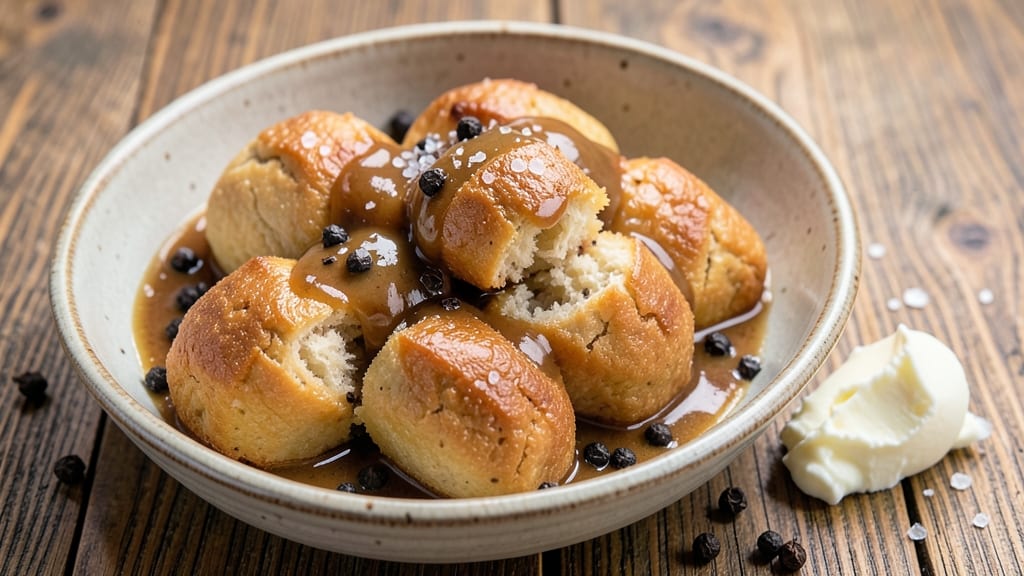
Austrian bread dumplings transform simple ingredients into pillowy clouds that soak up gravy like a dream. 💛 These fluffy, melt-in-your-mouth dumplings are the heart of Austrian cuisine, traditionally served alongside goulash or roasted meats. What makes them special is their tender, airy texture—achieved through precise dough preparation and gentle boiling.
The secret lies in the dough: a blend of flour, milk, eggs, and a touch of butter creates a light yet sturdy base. Shaping them properly ensures they hold together while boiling, and the right water temperature keeps them from falling apart.
This recipe delivers restaurant-quality results with just a few simple ingredients and careful technique.
Imagine tender dumplings floating in rich gravy, each bite releasing creamy, savory goodness. The dough rises slightly during boiling, creating those signature soft, cloud-like centers. Perfect for hearty Austrian meals or as a comforting side dish, these dumplings bring warmth and tradition to your table.
Serve them with your favorite gravy, roasted meats, or even as a standalone dish with butter and herbs. The beauty of this recipe is its versatility—simple enough for weeknight dinners yet impressive enough for special occasions. Let's get started on creating these Austrian classics!
Ingredients for austrian bread dumplings
Nine essential ingredients transform into restaurant-quality Austrian bread dumplings.
| Ingredient | Amount | Notes |
|---|---|---|
| All-Purpose Flour 🌾 | 2 cups | Sifted for light texture |
| Whole Milk 🥛 | 1 ¼ cups | Room temperature preferred |
| Large Eggs 🥚 | 2 whole | Freshly beaten for binding |
| Unsalted Butter 🧈 | ½ cup | Cold, cubed for texture |
| Diamond Crystal Kosher Salt 🧂 | ½ tsp | For seasoning dough |
| Granulated Sugar 🍚 | 1 tbsp | Balances flavors subtly |
| Baking Powder 🌿 | ½ tsp | Ensures proper rise |
| Water 💧 | 1 ½ cups | Cold for gentle boiling |
| Fresh Parsley 🌿 | ¼ cup | Chopped for garnish |
| Fresh Dill 🌿 | ¼ cup | Optional herb garnish |
| Butter (for serving) 🧈 | ¼ cup | Melted, full-fat preferred |
The flour forms the foundation—King Arthur or Gold Medal brands yield the best texture. Room-temperature milk prevents lumps, and fresh eggs ensure binding. For butter, Land O'Lakes or Plugrá work best; avoid salted varieties. The Diamond Crystal kosher salt is crucial—it dissolves cleanly without graininess. Fresh herbs elevate presentation, but dried can substitute at one-third the amount. Whole milk adds richness, while water maintains the proper dough consistency for gentle boiling.
No baking powder? Whisk 1 tsp baking soda with 1 tsp vinegar as a substitute. Short on herbs? Fresh chives or thyme work beautifully. For a lighter texture, fold in 1 tbsp whipped egg whites at the end. The dough should hold together when pressed but remain soft—overmixing toughens it. If the dough feels too sticky, add 1 tbsp more flour; if too dry, add 1 tsp milk. Boiling water temperature is critical: 185°F (85°C) prevents cracking while ensuring proper cooking.
Dumplings reheat beautifully—steam for 5 minutes to restore their pillowy texture. Store leftovers in an airtight container for up to 3 days in the fridge or 3 months frozen. For freezing, boil fully first, then freeze in a single layer before transferring to a bag. Portion before serving to maintain freshness. When reheating, cover with a damp towel to prevent drying. These dumplings pair perfectly with gravy or roasted meats, making them ideal for meal prep.
Why You'll Love This Recipe
- No-Knead Magic: I swear by this recipe because you just mix, let it rest, and roll—no standing at the counter for hours. The dough comes together with flour, milk, and butter, then rests while you prep everything else. Honestly, it’s the kind of recipe that makes me feel like a home cook and a lazy genius.
- Buttery Pillowy Joy: That rich combo of whole milk, butter, and eggs transforms simple flour into something tender and irresistible. The outside gets just crispy enough when browned, while the inside stays soft—like a hug in bread form. Between us, it’s the kind of texture that disappears too fast.
- Weeknight Workhorse: These dumplings play well with everything—soup, stew, or even as a side for roasted veggies. I’ve used them to stretch a budget-friendly meal into a hearty dinner, and they’re always the star. (Yes, even on a Tuesday night when you’re too tired to think.)
- Leftovers? No Problem: The dough keeps in the fridge for days, and cooked dumplings reheat beautifully—just a quick toss in the pan with a pat of butter. I’ll be real: I’ve made a double batch just to have them on hand for lazy mornings or unexpected guests. Frugal? Absolutely. Smart? Even more so.
Step-by-step instructions for Austrian bread dumplings
Here's how to create pillowy, melt-in-your-mouth dumplings that soak up gravy like sponges.
👨🍳 Step 1: Prepare the Dough Base
In a large mixing bowl, combine the 2 cups all-purpose flour, 0.5 tsp baking powder, 0.5 tsp Diamond Crystal kosher salt, and 1 tbsp granulated sugar. Whisk these dry ingredients together until evenly distributed—you should see no visible flour streaks. This ensures even rising and prevents dense spots in your dumplings.
Create a well in the center and add the 2 whole large eggs and 0.5 cup cold cubed butter. Using a fork or wooden spoon, gently incorporate the wet ingredients into the flour mixture, cutting through the dough until it begins to form a shaggy mass. Here's the thing—don't overmix yet. We want to preserve the gluten structure just enough to create a tender, not tough, dumpling.
🥘 Step 2: Incorporate Liquids for Perfect Texture
Gradually add the 1.25 cups room-temperature whole milk and 1.5 cups cold water to the bowl, mixing continuously with a wooden spoon. The dough should begin to come together into a soft, slightly sticky mass. If it feels too dry, add 1 tablespoon water at a time until it forms a cohesive dough that pulls away from the sides of the bowl.
This is where precision matters most. The dough should be soft enough to roll easily but not so sticky that it's impossible to handle. I like to press a small amount between my fingers—if it holds together without crumbling but still feels slightly tacky, you've got the right consistency. Cover the bowl with a damp towel and let the dough rest for 15 minutes at room temperature. This brief rest allows the flour to fully hydrate and the gluten to relax, making it easier to roll out later.
🍳 Step 3: Roll and Cut for Uniform Dumplings
Lightly flour a clean work surface and transfer the rested dough. Gently roll it out to about ¼-inch thickness using a rolling pin. I find that working in batches prevents the dough from drying out and makes rolling more manageable. Keep any unused dough covered with the damp towel while you work.
Use a round cutter or a glass to cut out 2-inch diameter circles from the rolled dough. You should get about 16 dumplings from this quantity. If the dough resists or cracks while cutting, it's too dry—sprinkle a little more water on the surface and gently re-roll. The key here is uniformity—the dumplings should cook evenly and absorb gravy consistently.
🔪 Step 4: Boil to Pillowy Perfection
Bring a large pot of salted water to a gentle boil. The water should be well-seasoned—about 1 tablespoon salt dissolved in 4 cups water. Once boiling, carefully add the dumplings in batches to avoid crowding the pot. They should float to the surface within 1-2 minutes—this indicates they're ready to cook through.
Reduce heat to maintain a gentle simmer and cook the dumplings for 8-10 minutes until they're cooked through. You'll know they're done when they're plump and no longer translucent when cut open. Here's where it gets tricky: don't overcook them. They'll continue cooking slightly when transferred to your gravy, and overcooking makes them dense instead of pillowy. Use a slotted spoon to transfer them to a serving platter, keeping them warm in a single layer.
🍽️ Step 5: Serve with Melted Butter and Herbs
In a small saucepan, melt the 0.25 cup butter (for serving) over low heat. Once fully melted, remove from heat and stir in the 0.25 cup chopped fresh parsley and 0.25 cup chopped fresh dill. This herb-infused butter adds a bright, aromatic finish that complements the dumplings beautifully.
Drizzle the warm herb butter generously over the dumplings just before serving. The butter should melt into the warm dumplings, creating a luscious, flavorful coating. Serve immediately with your favorite gravy—whether it's a rich mushroom sauce or a classic veal preparation. The dumplings should be tender enough to fall apart slightly with a gentle squeeze, yet still hold their shape when served. Each bite should deliver that perfect balance of soft, pillowy texture and savory flavor.
Pro Tips For Making Austrian Bread Dumplings
- CHILL THE DOUGH: I learned this the hard way—skipping the 30-minute fridge rest makes the dough sticky and hard to handle. Even if you’re eager to roll them out, give it a breather. The gluten relaxes, and the dumplings hold together better when they hit boiling water.
- MEASURE SALT BY WEIGHT: Diamond Crystal kosher salt varies in density, and eyeballing it leads to bland or overly salty dumplings. Use a scale for ½ teaspoon per batch—this recipe’s delicate balance of butter and milk demands precision. Trust me, your taste buds will notice.
- BOIL WITH LID OFF: I used to cover the pot, thinking steam would help, but the dumplings turned gummy. Keep the lid off after the first 2 minutes—you want a rolling boil, not a sauna. Adjust heat as needed to maintain steady bubbles, or they’ll absorb too much water and fall apart.
- USE COLD BUTTER: Cut the butter into the flour first, then add milk—this keeps the dough from getting greasy and ensures even distribution. Warm butter makes the dough fight you, and the dumplings end up dense instead of light. Cold butter also prevents the milk from separating mid-cook.
Storing and reheating this dish
Refrigerator Storage
Store your freshly boiled dumplings in an airtight container with a damp paper towel on top to prevent drying. Keep them refrigerated for up to 3 days—the texture remains tender when reheated properly.
I always portion them into single servings before storing for easy grab-and-go meals. The damp towel trick keeps them moist and prevents a rubbery texture when reheated. 💛
Freezer Prep Tips
For longer storage, boil the dumplings fully, then freeze them in a single layer on a baking sheet for 1 hour before transferring to a freezer-safe bag. This prevents clumping. Label with the date—they’ll keep for 3 months at 0°F (-18°C).
When ready to use, thaw overnight in the fridge before reheating. Never refreeze thawed dumplings—they lose their signature pillowy texture.
Reheating Methods
My favorite way to restore dumplings is steaming for 5-7 minutes with a splash of water in the pot. Cover tightly and let the steam work its magic—this method preserves their softness better than microwaving.
For stovetop reheating, simmer in ½ cup water over low heat for 3-4 minutes until warmed through. Avoid high heat, which can make them tough.
Gravy Pairing
Reheated dumplings pair perfectly with homemade gravy—simply warm the gravy separately and pour it over the dumplings just before serving. The dumplings will soak up the sauce beautifully, creating that restaurant-quality experience.
If you’re short on time, a quick butter and herb sauce (melted butter with chopped parsley and dill) works wonders too. Always reheat gravy to 165°F (74°C) for safety.
Make-Ahead Strategy
Prep the dough ahead of time and store it in the fridge for up to 24 hours before shaping. This saves you last-minute stress. For a full meal prep, boil the dumplings, cool them completely, then store as directed.
When reheating, add 1 tablespoon water or broth to the pot to prevent sticking. The key is gentle heat—never rush the process or you’ll sacrifice that cloud-like texture. ✨
Nutrition facts
Frequently asked questions
Why do Austrian bread dumplings need to rest after mixing?
The 15-minute rest lets the flour fully hydrate and relaxes the gluten, making them easier to roll without cracking. This prevents tough, chewy dumplings and ensures that perfect pillowy texture. Think of it as giving the dough a quick nap before shaping!
Can I make these without baking powder?
Yes! Mix 1 tsp baking soda with 1 tsp vinegar as a substitute. The chemical reaction creates lift similar to baking powder. Just be sure to use it immediately after mixing—it loses potency quickly. The dumplings will still be tender but may rise slightly less.
What's the best way to prevent dumplings from falling apart?
Handle the dough gently and avoid overmixing—this keeps gluten development minimal. When boiling, use gentle simmering (not a rolling boil) and cook for 8-10 minutes max. Overcooking makes them mushy. A quick test: they should float and feel firm but still tender when cut open.
How do I serve them without gravy?
Try drizzling with melted butter infused with fresh herbs (like parsley and dill) or a simple lemon butter sauce. For extra flavor, sprinkle with toasted breadcrumbs or grated Parmesan. They're delicious as a side for roasted meats or even as a standalone dish with a sprinkle of salt and pepper.
Why did my dumplings turn out dense instead of fluffy?
This usually happens from overmixing the dough (developing too much gluten) or overcooking them. For fluffy results, mix just until combined, roll the dough gently, and remove dumplings from boiling water as soon as they float. The baking powder and egg whites also contribute to lightness—make sure they're fresh!