
Side Dishes
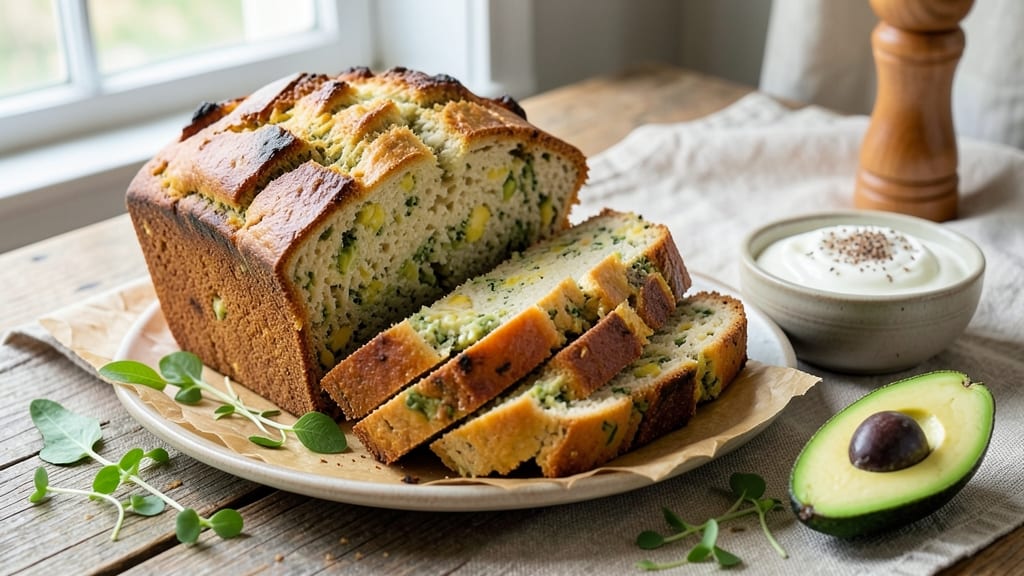
This avocado bread recipe with yogurt delivers the perfect balance of creamy avocado richness and tangy yogurt zing in every bite. The secret lies in blending ripe avocado directly into the dough, creating ultra-moist crumb with those signature swirls of vibrant green.
I developed this recipe after years of experimenting with naturally sweetened breads—this version stays fresh for days without drying out, thanks to the yogurt's moisture-retaining properties.
The process is straightforward but yields restaurant-quality results: mix a simple dough with yogurt for tenderness, then fold in mashed avocado for that signature marbled effect. Baking at 350°F for 30-35 minutes ensures a golden crust while keeping the interior soft and pillowy.
The avocado adds natural sweetness that pairs beautifully with the yogurt's tang, creating a flavor profile that's both comforting and sophisticated.
What makes this bread truly special is how it transforms basic ingredients into something extraordinary. The avocado swirls remain creamy and vibrant, while the yogurt-infused dough creates a texture that's tender yet sturdy enough for slicing.
Perfect for breakfast toast, sandwiches, or as a standalone treat with butter and jam, this bread delivers on every promise of moisture and flavor.
For added texture, sprinkle sesame seeds or poppy seeds on top before baking, or serve warm with a dollop of Greek yogurt and honey. The recipe scales easily for gatherings, and leftovers reheat beautifully.
Let's get started on this crowd-pleasing loaf that proves homemade bread can be both impressive and effortless.
Ingredients for avocado bread recipe with yogurt
These twelve ingredients transform into restaurant-quality avocado bread with yogurt's signature moisture and avocado's velvety swirls.
| Ingredient | Amount | Notes |
|---|---|---|
| All-Purpose Flour 🌾 | 3 ½ cups | Unbleached preferred for better texture |
| Plain Yogurt 🥛 | ½ cup | Full-fat for maximum moisture retention |
| Ripe Avocados 🥑 | 1 whole | Flesh only, about 1 cup mashed |
| Granulated Sugar 🍚 | ¼ cup | Light brown sugar for subtle caramel notes |
| Active Dry Yeast 🍞 | 1 package | 2.25 tsp (1 packet), dissolved in warm water |
| Large Eggs 🥚 | 1 whole | Room temperature for even mixing |
| Unsalted Butter 🧈 | ½ cup | Cold, cubed for easier incorporation |
| Milk 🥛 | ¼ cup | Whole milk for optimal dough tenderness |
| Salt 🧂 | 1 tsp | Diamond Crystal preferred for accurate measurement |
| Vanilla Extract 🌿 | 1 tsp | Pure vanilla for authentic flavor |
| Sesame Seeds 🌱 | 2 tbsp | Toasted lightly for enhanced aroma |
| Poppy Seeds 🌱 | 1 tbsp | Optional for added texture contrast |
The avocados are non-negotiable for that signature marbled effect. Ripe Hass avocados from the produce section at Whole Foods or your local farmers market yield the creamiest texture—avoid those rock-hard ones. For the yogurt, Fage 5% plain or Siggi's Icelandic Skyr provide the perfect balance of tang and moisture. The flour matters too: King Arthur Unbleached or Bob's Red Mill All-Purpose create a lighter crumb than bleached flours. Store-bought yeast packets are fine, but if you're ambitious, active dry yeast from a bulk bin stays fresher longer. For the butter, Plugrá or Land O'Lakes work well, but European-style cultured butter adds an extra layer of richness.
No ripe avocados? Mash 1 cup of canned pumpkin puree as a substitute—it mimics the moisture content surprisingly well. Short on yogurt? Substitute sour cream at half the amount, though the flavor will be slightly tangier. The sesame seeds can be omitted if you're avoiding gluten, but toasted pumpkin seeds make a great alternative. For a sweeter version, maple syrup or agave nectar can replace the sugar at a 1:1 ratio. The vanilla extract is crucial—imitation vanilla lacks the depth, so splurge on the good stuff. If you're making this ahead, store the dough overnight in the fridge for enhanced flavor development.
The avocado dough keeps for 24 hours in the fridge before baking, allowing flavors to meld beautifully. Once baked, wrap the loaf in a clean kitchen towel and store at room temperature for 2 days for the best texture. For longer storage, slice and freeze individual portions on a tray before transferring to a bag—up to 3 months. The sesame seeds stay crisp for 1 week if stored in an airtight container. For reheating, wrap slices in foil and warm in a 350°F oven for 5-10 minutes to restore that fresh-baked aroma.
Why You'll Love This Recipe
- No Mash Needed: I swear by this trick—just blend the avocado and yogurt right in the bowl. No peeling, pitting, or sticky hands. The yeast activates in the warm yogurt, so the dough rises faster than my patience when I’m hungry.
- Rich Without Butter: That creamy avocado-yogurt combo replaces butter, but you’d never know. The bread stays tender, the crust has just enough crisp, and the flavor? Like a cross between zucchini bread and a brioche roll—without the fuss of either.
- Breakfast or Snack: Honestly, I eat this at 8 AM with jam or at 3 PM with peanut butter. It’s great toasted, sliced for sandwiches, or even packed in lunchboxes. (My kids still ask for it even when I forget to make it.)
- Pantry-Friendly Magic: Flour, sugar, yeast—stuff you already have. The avocado’s the star, but a single fruit stretches into two loaves. Leftovers? Toast them again the next day. Budget win, flavor win.
Step-by-step instructions for avocado yogurt bread
This method delivers tender, ultra-moist bread with vibrant avocado swirls and a perfect crumb.
👨🍳 Step 1: Activate the Yeast and Prepare the Dough Base
In a small bowl, dissolve the 1 package active dry yeast in ¼ cup warm milk (about 110°F) with 1 tablespoon granulated sugar from the 0.25 cup total. Let it sit for 5-10 minutes until frothy—this confirms your yeast is active. If it doesn't bubble, start over with fresh yeast.
In a stand mixer fitted with the dough hook attachment, combine the 3.5 cups all-purpose flour, 1 teaspoon salt, and the remaining 0.15 cup granulated sugar. Mix on low speed to distribute evenly. Add the 0.5 cup plain yogurt, 1 whole large egg, and 0.5 cup cold unsalted butter (cubed). Mix on medium speed for 3-4 minutes until the dough begins to pull away from the bowl sides. The butter should be incorporated but still visible in small chunks.
👨🍳 Step 2: Create the Avocado Swirl Filling
While the dough mixer runs, prepare the avocado filling in a separate bowl. Scoop out the flesh from the 1 whole ripe avocado (about 1 cup mashed) and mash it with a fork until completely smooth. Stir in 1 teaspoon vanilla extract and set aside. This filling should be thick but spreadable—if too thick, add 1 teaspoon milk to reach the right consistency.
Once the dough is ready, remove it from the mixer and turn it out onto a lightly floured surface. Divide the dough into 4 equal portions (about 1 pound each). Roll each portion into a 12-inch circle, about ¼-inch thick. Spread ¼ of the avocado mixture evenly over each circle, leaving a ½-inch border around the edges. Roll each circle tightly into a log, pinching the seam to seal.
🥘 Step 3: Assemble and Shape the Loaves
Arrange the 4 avocado-filled dough logs seam-side down in a 9x5-inch loaf pan, spaced evenly. Cover the pan with a clean kitchen towel and let the dough rise in a warm place for 1-1.5 hours or until it has nearly doubled in size. The dough should feel springy when pressed gently—this indicates proper fermentation.
Preheat your oven to 375°F while the dough rises. Once risen, use a sharp knife to make 4 diagonal slashes across the tops of the loaves for a professional finish. Sprinkle 2 tablespoons sesame seeds and 1 tablespoon poppy seeds evenly over the tops. Bake for 30-35 minutes until the bread is deep golden brown and sounds hollow when tapped on the bottom.
⏰ Step 4: Cool and Serve for Maximum Moisture
Remove the loaves from the pan and transfer them to a wire rack to cool completely for at least 15 minutes before slicing. This resting period allows the bread to set properly and prevents crumbling. The internal temperature should drop to below 140°F before cutting—this ensures clean slices and maintains that ultra-moist texture.
For the best experience, serve the bread warm with a thin layer of avocado butter or alongside a tangy yogurt dip. Each slice should reveal those vibrant green avocado swirls throughout, with a tender crumb that stays moist for hours. Store any leftovers wrapped in plastic at room temperature for 2 days or freeze for up to 3 months for freshness.
Pro Tips For Making Avocado Bread Recipe With Yogurt
- Mash Avocados First: I learned this the hard way—skipping this step means you’ll end up with avocado chunks in your dough, no matter how much you mix. Scoop out the flesh, mash it with a fork until it’s completely smooth, then stir in the yogurt. No blender needed, and you’ll avoid that weird texture where you can still pick out bits.
- Use Warm Yogurt: Cold yogurt slows yeast activation, and you’ll end up waiting longer for your dough to rise. Warm the yogurt slightly (just enough to feel lukewarm, not hot) before mixing it into the wet ingredients. Your dough will rise faster, and you’ll save time—trust me, I’ve waited too long for dough to prove.
- Don’t Overmix the Dough: This isn’t a bagel—you’re not trying to develop gluten like you would for a crusty loaf. Mix the dough just until the flour is incorporated and the yeast is dissolved. Overmixing makes the bread dense, and you’ll end up with something closer to a cake than a light, airy avocado bread.
- Proof at Room Temp: Skip the fridge for this one. Place your dough in a lightly oiled bowl, cover it with a damp towel, and let it rise in a warm spot (like near the oven with the light on) for about 1–1.5 hours. The yeast works best at room temperature, and you’ll get a better rise than if you let it sit in a cold kitchen for hours.
Troubleshooting perfect results
Dense Dough Issues
The most common problem is dough that's too thick or dry, often from overmixing or incorrect flour measurements. I've found using King Arthur Unbleached Flour (measured by weight at 140g per cup) creates the perfect texture—never scoop directly from the bag.
If your dough feels tough, add 1 tablespoon milk at a time until it becomes pliable. For extra moisture, replace 2 tablespoons of flour with 2 tablespoons of yogurt in the initial mix. 🥛
Avocado Filling Too Watery
When avocado filling becomes too runny, it can leak during baking or create a soggy crust. To fix this, drain any excess liquid from your mashed avocado using a fine-mesh sieve. For every ½ cup of avocado pulp, add 1 teaspoon of cornstarch to thicken it properly.
If you're short on time, Greek yogurt mixed with lemon juice works as a backup filling that holds its shape better. Always test consistency by spreading a small amount on parchment paper—it should hold its shape without dripping.
Uneven Rising
If your dough rises unevenly or collapses during proofing, your yeast may be inactive or the environment too cold. First, verify your yeast by testing it in ¼ cup warm milk—it should bubble within 5-10 minutes.
Create a warm proofing environment by placing your dough pan in a turned-off oven with a bowl of hot water inside. For extra insurance, cover the dough with a damp towel to maintain humidity.
If using a stand mixer, ensure the dough hook is properly attached and the bowl is clean—any residual grease can inhibit yeast activity. 🔥
Bread Too Dense After Baking
Dense bread after baking usually means the dough wasn't properly aerated or baked at the wrong temperature. Make sure your oven is fully preheated to 375°F and uses the middle rack for even heat distribution.
For extra lift, fold the dough into itself 2-3 times during the final rise (known as "laminating"). If your bread still feels heavy, try baking at 350°F for 40 minutes instead—lower heat allows slower steam development, creating a lighter crumb.
Always check internal temperature with an instant-read thermometer (190-200°F at center).
Avocado Swirls Disappearing
When avocado swirls vanish during baking, the filling was likely overworked or the dough too tightly wrapped. For perfect swirls, keep your avocado mixture thick and spread it evenly in a thin layer (¼-inch thick) on each dough circle.
When rolling, pinch the edges gently but don't squeeze too tightly—this traps air and prevents filling from escaping. If you notice filling oozing during the first 10 minutes of baking, cover the loaf with foil to slow moisture loss.
For extra visual appeal, use a piping bag to create decorative swirls before rolling. 🌿
Crust Too Dark or Pale
Achieving the perfect crust color requires precise temperature control and timing. For a golden crust, bake at 375°F and rotate pans halfway through. If your crust browns too quickly, tent the loaves with foil after 15 minutes.
For a paler crust, reduce temperature to 350°F and bake for 40 minutes. The sesame seeds on top also affect color—lightly toast them in a dry pan for 1 minute before sprinkling to enhance browning.
Always use oven thermometers to verify your oven's accuracy, as home ovens often run 25°F hotter or colder than set.
Nutrition facts
Frequently asked questions
Why does yogurt make this bread so moist?
The yogurt contains natural lactic acid that breaks down gluten proteins, creating a more tender crumb. Plus, its fat content traps moisture during baking, keeping the bread soft for hours. For extra moisture, use full-fat yogurt like Fage 5%—it yields the best results.
Can I substitute Greek yogurt for regular yogurt?
Yes, but you'll need to adjust the recipe slightly. Greek yogurt is thicker, so thin it with 1-2 tablespoons milk to match regular yogurt's consistency. The flavor will be tangier, but the texture remains equally moist. For a milder taste, use a blend of both yogurts.
How do I prevent the avocado from turning brown in the dough?
Mix the avocado filling with ½ teaspoon lemon juice or ½ teaspoon apple cider vinegar to slow oxidation. Work quickly when assembling the dough logs, and refrigerate any unused filling until ready to use. The filling stays vibrant when kept cold and sealed tightly.
Is this bread gluten-free?
No, this recipe requires all-purpose flour for the signature tender crumb. For a gluten-free version, replace the flour with a 1:1 gluten-free blend like Bob's Red Mill, but expect a denser texture. Add ½ teaspoon xanthan gum to improve elasticity.
Can I make this bread without a stand mixer?
Mix the dough by hand in a large bowl using a wooden spoon or your hands. Knead for 8-10 minutes until the dough is smooth and elastic. The yogurt and butter will make it slightly stickier, so flour your hands as needed. A dough scraper helps with cleanup.