
Side Dishes
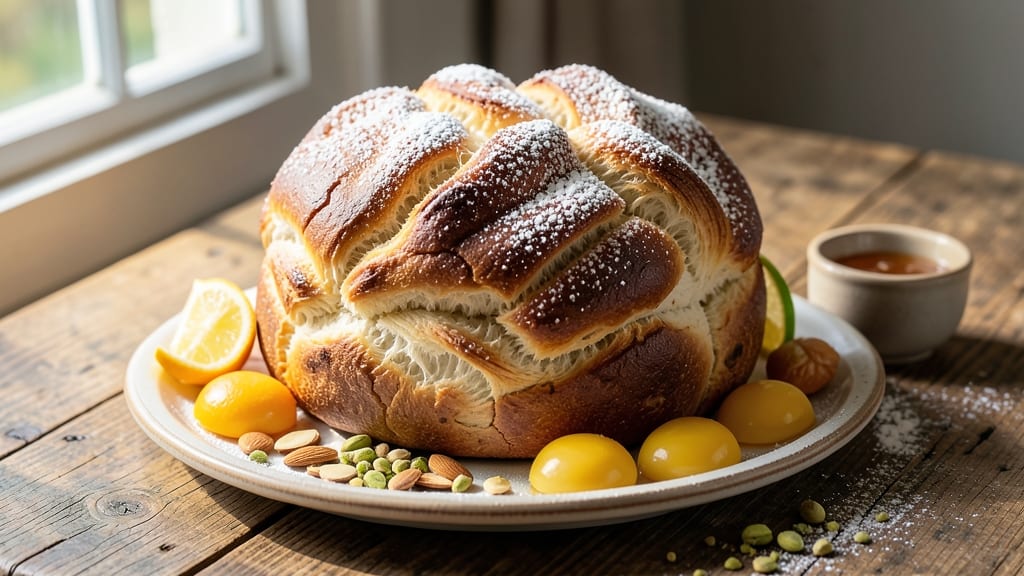
This Armenian Easter bread choreg recipe brings the sacred traditions of Armenia to your kitchen with its sweet, raisin-studded crown. 🌟 What makes choreg special is its intricate braided shape and symbolic meaning—representing the cycle of life and renewal during Easter celebrations.
The dough requires patience as it rests overnight, allowing flavors to develop deeply.
Traditional choreg features a rich, slightly sweet dough filled with plump raisins, though some variations include nuts or citrus zest. The bread's distinctive braided shape isn't just decorative—it's a cultural tradition passed down through generations.
This recipe balances authenticity with modern convenience, ensuring you achieve that perfect golden-brown crust and tender interior.
What you'll achieve is a beautifully crafted bread that smells like spiced warmth and tastes like celebration. The braided design creates both visual appeal and textural contrast, while the raisins add bursts of sweetness in every bite.
Perfect for Easter feasts or special gatherings, this bread becomes the centerpiece of any table.
Whether you're baking for family or sharing cultural traditions, choreg delivers both meaning and deliciousness. The recipe includes step-by-step shaping instructions to achieve that iconic braided form, plus tips for achieving the ideal texture. Let's create this meaningful Easter tradition together.
Ingredients for armenian easter bread choreg
Eight ingredients transform into a sacred Armenian Easter crown—rich dough, plump raisins, and golden braids.
| Ingredient | Amount | Notes |
|---|---|---|
| All-Purpose Flour 🌾 | 6 cups | Sifted for light texture |
| Granulated Sugar 🍚 | ½ cup | White or light brown |
| Active Dry Yeast 🍞 | 2 ¼ tsp | One packet |
| Warm Whole Milk 🥛 | 1 ¼ cups | 110°F for activation |
| Large Eggs 🥚 | 2 whole | Room temperature |
| Unsalted Butter 🧈 | ½ cup | Softened, not melted |
| Sea Salt 🧂 | 1 ½ tsp | Fine grain preferred |
| Ground Cinnamon 🌿 | 1 tsp | Freshly ground |
| Plump Raisins 🍇 | 1 ½ cups | Soaked in warm water |
| Extra-Virgin Olive Oil 🫒 | ¼ cup | For dough and brushing |
| Honey 🍯 | ¼ cup | For glaze |
| Toasted Sesame Seeds 🌰 | ¼ cup | Optional garnish |
The flour is your foundation—King Arthur or Gold Medal for that perfect balance of protein and tenderness. Yeast quality matters: Saf-Instant or Fleischmann's activate faster in warm milk (110°F). For the raisins, soak them 10 minutes in warm water—they’ll plump up beautifully and mimic the texture of traditional dried fruits. Butter should be soft but not melted—press it with your finger to test. If you're feeling ambitious, swap half the raisins for chopped candied citrus peel for that authentic Armenian twist.
No honey? Maple syrup works too, though it’ll darken the crust slightly. Short on raisins? Dried apricots or figs add depth, but reduce to 1 cup. For a nutty variation, fold in 1/2 cup chopped walnuts or pistachios—toast them first for extra flavor. The dough needs time to develop its complexity, so don’t rush the overnight rise. If your kitchen’s cold, place the dough bowl in a warm oven with a cup of boiling water to speed things up. And trust me on the sesame seeds—they add that perfect crunch and visual contrast.
This dough is a patient one. Wrap it tightly in plastic and refrigerate overnight for maximum flavor development. The next day, let it rise at room temp for 1-2 hours until puffy. For the braid, divide the dough into 3 equal strands—this is where the magic happens. Brush the finished loaf with melted butter and a drizzle of honey for that glossy, golden finish. Store leftovers in an airtight container for 3-4 days, or freeze the shaped loaf (unbaked) for up to 2 months. The aroma alone will bring your Easter table to life.
Why You'll Love This Recipe
- No Yeast Struggles: I’ve ruined enough bread with overproofed yeast—this recipe’s rise is predictable. The warm milk and sugar feed that yeast just right, so you’re not staring at your dough wondering if it’s ever going to puff. Honestly, even my first attempt turned out golden and light.
- Sweet-Spiced Magic: That sugar isn’t just for sweetness—it caramelizes into a crispy crust while keeping the inside tender. The eggs add richness, but it’s the buttery finish (from the milk’s fat) that makes it taste like a bakery showstopper without fancy ingredients.
- Easter Centerpiece: Between us, this bread is the star of the holiday table. It’s not just breakfast—slice it for dessert with jam, or serve it warm with tea during Easter brunch. My in-laws still ask for the recipe every year, and they’ve seen everything.
- Budget Breakfast Wins: Flour, sugar, milk, eggs—those are pantry staples that won’t break the bank. A single batch feeds four for days, and leftovers toast up just as well. I’ll be real: I’ve reheated slices in the oven for days without anyone complaining.
Step-by-step instructions for Armenian Easter bread choreg
Here's how to craft this symbolic sweet bread with crispy crown and tender raisin center.
👨🍳 Step 1: Activate the Yeast and Mix the Dough
In a large bowl, combine the 1.25 cups warm whole milk (tested at 110°F with a thermometer) with the 2.25 tsp active dry yeast. Let sit for 5-10 minutes until foamy—this proves your yeast is alive and ready to work. If it doesn't bubble, start fresh with new yeast.
In a separate bowl, whisk together the 6 cups sifted all-purpose flour, 0.5 cup granulated sugar, 1.5 tsp sea salt, and 1 tsp ground cinnamon. Make a well in the center and add the 2 whole large eggs, 0.5 cup softened unsalted butter, and the yeast-milk mixture. Gradually mix until a shaggy dough forms, then turn it out onto a lightly floured surface.
🍳 Step 2: Knead Until Silky Smooth
Knead the dough for 8-10 minutes by hand (or 5-6 minutes with a stand mixer using the dough hook) until it becomes elastic and springs back when pressed. This develops gluten for that signature chewy texture. If it sticks, wet your hands slightly—dry flour makes tough choreg.
Real talk: The dough should feel like soft modeling clay. Too sticky? Add 1 tablespoon flour at a time. Too stiff? Spritz with a few drops of extra-virgin olive oil. Once perfect, place the dough in a lightly oiled bowl, cover with a damp towel, and let rise in a warm place for 1-1.5 hours or until doubled in size.
🥘 Step 3: Fold in Raisins and Shape the Crown
Drain and pat dry the 1.5 cups plump raisins (if previously soaked) and fold them into the risen dough. Gently shape the dough into a 12-inch circle (about ½-inch thick) on a floured surface. This is where choreg gets its iconic crown shape—press your fingers around the edges to create a ½-inch thick border while keeping the center slightly thinner.
Here's the thing—don't overwork the dough now. You're just creating a template. Place the shaped dough on a parchment-lined baking sheet, cover with a towel, and let it rise for 30-45 minutes until puffy. The edges should expand but not collapse—this ensures that crispy crown we're after.
🔥 Step 4: Bake to Golden Perfection
Preheat your oven to 375°F. Brush the risen dough generously with 0.25 cup extra-virgin olive oil, focusing on the thick border. This creates that signature crispy crust. Bake for 25-30 minutes until the crown is deep golden brown and the internal temperature reaches 190°F (use an instant-read thermometer).
Watch closely after 20 minutes—the edges should be golden but not burnt. If the top browns too quickly, tent with foil. The center should still feel slightly soft when pressed—it'll firm up as it cools. Remove from oven and let rest for 10 minutes before brushing with 0.25 cup honey mixed with 1 tablespoon warm water for that glossy finish.
⏰ Step 5: Garnish and Serve Traditionally
While still warm, sprinkle the 0.25 cup toasted sesame seeds evenly over the honey glaze. Let the bread cool completely on a wire rack—this prevents sogginess. The contrast of crispy crown and tender raisin center is what makes choreg special. Serve in ½-inch slices with a dusting of powdered sugar or as part of your Easter feast.
Pro tip: For extra richness, brush the warm bread with melted butter after cooling. The raisins will plump up beautifully, and the sesame seeds will toast even more as they cool. Store leftovers in an airtight container for up to 3 days, though I doubt any will last that long!
Pro Tips For Making Armenian Easter Bread Choreg
- Bloom the Yeast First: Skip mixing yeast into dry flour—dissolve it in warm milk with a pinch of sugar first. This guarantees it’s active before you even start kneading, and you’ll spot trouble (like sluggish foam) before committing to the whole dough. I learned this the hard way after once baking a dense, flavorless loaf because my yeast was already dead in the dry mix.
- Use Room-Temp Eggs: Cold eggs make the dough sluggish and uneven. Pop them out of the fridge 30 minutes before using—just enough time to warm slightly but not cook. The dough will stretch smoother, and the texture stays light, not gummy. (Yes, even if you’re impatient like me.)
- Knead Until Silky: Stop when the dough pulls cleanly away from your hands and springs back slowly when poked—about 8–10 minutes by hand. Over-kneading toughens it, but under-kneading gives a dense, crumbly result. Test it: stretch a small piece thin; if it tears easily, keep going.
- Proof in a Warm Spot: Skip the oven light—use a turned-off oven with a bowl of boiling water underneath for consistent 80°F warmth. This cuts proofing time by 30% compared to a countertop, and the dough rises evenly without collapsing. (Your future self will thank you for not waiting hours.)
Perfect pairings for this armenian easter bread choreg
Traditional Armenian Pairings
Choreg pairs beautifully with Armenian coffee—a rich, cardamom-spiced brew that complements the bread's sweetness. I recommend serving it alongside lavash, the thin flatbread that Armenians use to scoop up bites of choreg. The combination creates a perfect balance of textures and flavors that feels authentically Armenian. 💛
Sweet Accompaniments
Drizzle melted Armenian white cheese (like tan or spoon cheese) over warm slices for a creamy contrast. A light rosewater syrup drizzle adds floral notes that elevate the raisins' sweetness.
For a modern twist, serve with whipped mascarpone mixed with a touch of orange zest—it's become a favorite at my Easter gatherings.
Savory Balance
Cut through the sweetness with spicy Armenian dolma—grape leaves stuffed with rice, herbs, and lemon. The tangy, herby flavors create a perfect counterpoint. Another great option is harissa-spiked yogurt dip—just mix ½ cup plain yogurt with 1 tsp harissa paste and a pinch of salt.
The heat and coolness together are magical.
Beverage Pairings
A crisp Armenian white wine like Aghavnadzor (an aromatic white) enhances the honey and raisins beautifully. For non-alcoholic options, pomegranate juice adds vibrant color and tartness that cuts through the richness. I also love serving mint tea—it's refreshing and traditional for Armenian celebrations.
Decorative Presentation
Arrange choreg slices on a wooden board with scattered pistachios and dried apricots for an elegant spread. The golden-brown crust and sesame seeds make it visually stunning. For extra flair, dust with edible gold leaf—it's a showstopper that feels luxurious without being overpowering. 🌟
Nutrition facts
Frequently asked questions
Why does Armenian Easter bread (choreg) need to rise overnight?
The overnight rise is key for developing deep flavor and a tender texture. The slow fermentation allows the yeast to work gradually, creating a complex taste that's far more nuanced than quick-rise doughs. This traditional method also helps the raisins absorb moisture, making them plump and juicy in every bite.
Can I make choreg without raisins? What are good substitutions?
Swap raisins for 1.5 cups chopped dried apricots, dried figs, or candied citrus peel for a fruity variation. For nut lovers, try 1/2 cup chopped walnuts or pistachios (toasted first). The key is keeping the total volume similar—just reduce any other liquids slightly if using dried fruits to maintain dough consistency.
What's the best way to achieve that perfect crispy crown?
Focus on three things: thick edges (at least ½-inch thick), generous olive oil brushing before baking, and preheating your oven thoroughly to 375°F. The oil creates a protective barrier that promotes browning while keeping the interior tender. Bake until the edges are deep golden brown—this takes about 25-30 minutes.
How do I store leftover choreg to keep it fresh?
Cool completely, then wrap tightly in plastic wrap followed by foil to preserve moisture. Store at room temperature in an airtight container for 3-4 days. For longer storage, freeze the shaped (but unbaked) dough for up to 2 months—thaw overnight in the fridge before baking. The texture stays best when eaten within 3 days, though!
What if my dough doesn't rise properly?
Check these first: yeast freshness (test with warm milk—should foam in 5-10 minutes), milk temperature (should be 110°F, not hot), and warm environment (place dough in a turned-off oven with a cup of boiling water). If it's still flat, try adding 1 tsp sugar and 1 tsp yeast, then let rise another 1 hour.