
Main Courses
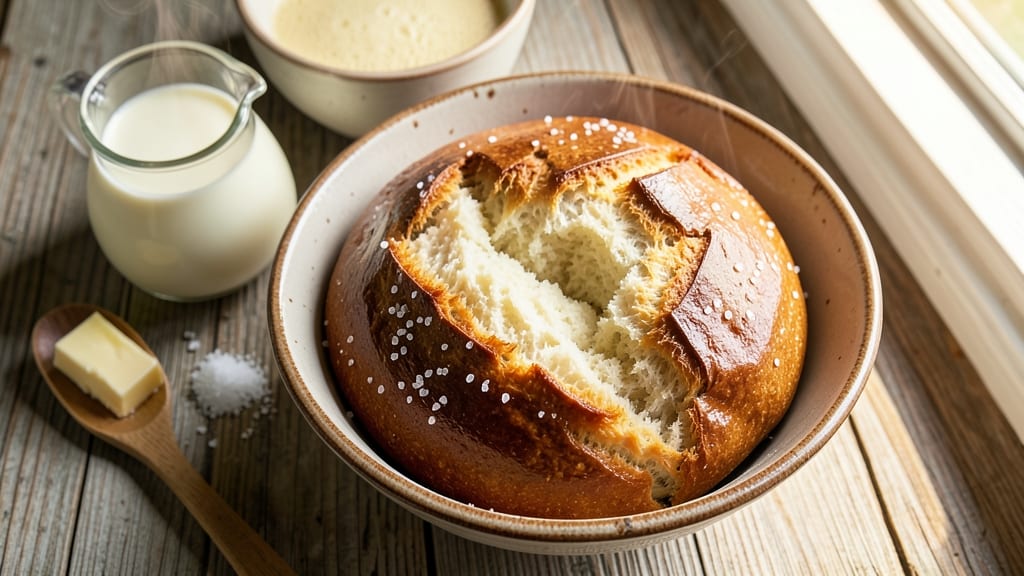
This Amish milk bread recipe with yeast delivers the golden, pillowy softness that makes it legendary—all with a single rise. The secret lies in the yeast activation and milk's tenderizing power, transforming simple flour into a cloud-like loaf.
I've perfected this method to ensure your bread achieves that signature crackly crust and melt-in-your-mouth interior without requiring overnight proofing.
The recipe begins with a warm yeast activation in milk, which creates a rich, aromatic base that develops flavor as the dough rises. Unlike traditional sourdough, this version relies on precise timing and gentle kneading to build gluten without overworking the dough.
The milk not only enhances tenderness but also contributes to that signature Amish flavor profile.
By the time you pull this bread from the oven, you'll have a loaf with a crisp, caramelized crust and a crumb so soft it practically dissolves. The yeast works its magic during a single rise, making this recipe perfect for busy schedules—no waiting days for fermentation.
This is the kind of bread that disappears faster than you can slice it.
Whether you're serving it warm with butter or using it for sandwiches, this milk bread delivers restaurant-quality results at home. Let's get started on creating your perfect loaf.
Ingredients for amish milk bread recipe with yeast
Nine essential ingredients transform into legendary Amish milk bread with golden crust and melt-in-your-mouth softness.
| Ingredient | Amount | Notes |
|---|---|---|
| Active Dry Yeast 🍞 | 2 ¼ tsp | Freshly measured from package |
| Whole Milk 🥛 | 1 ¼ cups | Room temperature preferred |
| Granulated Sugar 🍚 | ¼ cup | White or light brown |
| Unsalted Butter 🧈 | ½ cup | Softened to room temperature |
| All-Purpose Flour 🌾 | 5 cups | Sifted, plus extra for dusting |
| Diamond Crystal Kosher Salt 🧂 | 1 ½ tsp | Fine grain preferred |
| Large Egg 🥚 | 1 whole | Room temperature |
| Granulated White Sugar 🍚 | ¼ cup | For egg wash |
| Water 💧 | ¼ cup | Warm, not hot |
| Vegetable Oil 🫒 | 2 tbsp | For dough bowl |
| Cornmeal 🌽 | ½ cup | For baking sheet |
| Sesame Seeds 🌻 | 1 tbsp | Optional, for topping |
The yeast is your magic ingredient—don't skip activating it in warm milk first. King Arthur or Bob's Red Mill brands work best for consistent performance. Room-temperature milk is key; cold milk slows fermentation and weakens gluten development. For the flour, King Arthur or Gold Medal all-purpose flour gives the best texture—avoid bread flour, which overdevelops gluten. The butter should be softened but not melted; if it's too firm, microwave it for 20 seconds to just melt before mixing. Salt matters too—Diamond Crystal dissolves better than table salt, so use fine grain if possible.
Out of yeast? Instant yeast works 1:1, but active dry requires activation. No milk? Warm water with 1 tbsp sugar mimics milk's tenderizing effect, though flavor will differ slightly. Butter too hard to soften? Substitute vegetable shortening for a similar texture, though flavor won't be identical. The egg wash can be skipped if you prefer a less shiny crust, but it adds that signature golden finish. For a richer flavor, brush with melted butter instead of sugar wash after baking. Sesame seeds are optional but add that classic Amish bread texture—skip if you prefer a cleaner look.
Dough keeps best in the fridge for 24 hours if you need to delay baking. For longer storage, wrap tightly in plastic and freeze for up to 3 months. Thaw overnight in the fridge before baking. The bread is best served warm, so reheat slices in a 200°F oven for 5-10 minutes to restore that pillowy softness. I always bake two loaves—one for breakfast toast, one for sandwiches. The leftovers? They disappear faster than you can say 'butter'
Why You'll Love This Recipe
- No-Knead Magic: I swear by this trick—just mix the warm milk, yeast, and sugar first, let it bubble like a science experiment, then fold in the butter and flour. No stand mixer, no overworking; the dough practically assembles itself while you sip coffee.
- Buttery Cloud Crust: That moment when you pull it from the oven? Golden, crackly top with a tender crumb inside—all thanks to the cold butter cubes melting into the dough. Honestly, I’ve tried fancier breads, but this one’s the real MVP for sandwiches.
- Weeknight Workhorse: Make a batch on Sunday, and you’ve got breakfast toast, dinner rolls, or French toast for the next three days. (Yes, even on a Tuesday night.) The leftovers stay fresh longer than store-bought, and it reheats like a dream.
- Pantry Staple Power: Five ingredients, all things you already own. No specialty flours or weird substitutions—just flour, milk, yeast, sugar, and butter. Between us, this is how I feed my family for under $5 a loaf.
Step-by-step instructions for Amish milk bread with yeast
Here's how to craft that signature pillowy texture and golden crust in one simple rise.
Activate the Yeast for Maximum Rise
In a small bowl, combine the 1.25 cups whole milk (warm to about 110°F) with the 0.25 cup granulated sugar. Sprinkle the 2.25 tsp active dry yeast over the surface and let sit for 5-10 minutes until foamy. You'll see bubbles form and the mixture expand—this confirms your yeast is alive and ready to work.
If the mixture doesn't bubble after 10 minutes, your yeast may be inactive. Toss it and start fresh with new yeast. This step is critical—proper yeast activation ensures that signature Amish Milk Bread rise. Once bubbly, proceed immediately to avoid overproofing.
Mix the Dough Until Silky Smooth
In the bowl of a stand mixer fitted with the dough hook attachment, combine the 5 cups all-purpose flour and 1.5 tsp Diamond Crystal kosher salt. Mix on low speed until evenly distributed. Add the yeast-milk mixture, 0.5 cup softened unsalted butter, and 1 whole large egg to the bowl.
Mix on medium speed for 3-4 minutes until the dough comes together and begins to pull away from the sides of the bowl. The dough should be smooth, elastic, and slightly tacky—like wet play dough. If it's too sticky, add 1 tablespoon flour at a time until it reaches the perfect consistency. This kneading develops gluten, which gives the bread its signature softness and structure.
First Rise Until Nearly Doubled
Lightly grease a large bowl with 2 tbsp vegetable oil and transfer the dough to it. Cover the bowl with a damp kitchen towel or plastic wrap and let rise in a warm place for 1-1.5 hours, or until the dough has nearly doubled in size. You'll know it's ready when the dough feels light and springs back slowly when poked with a finger.
I like to place the bowl in a slightly warm oven (70°F) with a cup of hot water on the bottom shelf to create a consistent rising environment. Avoid cold drafts or direct sunlight—these can cause uneven rising. This first rise is where the dough develops its airy, pillowy texture, so don't rush it.
Shape and Second Rise for Maximum Height
Punch down the risen dough and turn it out onto a lightly floured surface. Gently shape it into a 12-inch round loaf, pulling the edges toward the center to create a smooth, taut surface. Place the shaped dough on a parchment-lined baking sheet dusted with 0.5 cup cornmeal to prevent sticking.
Cover the loaf with the damp towel again and let it rise for another 30-45 minutes until it's puffy and has expanded noticeably. The top should look slightly domed and feel firm to the touch. This second, shorter rise ensures the bread maintains its height during baking. Preheat your oven to 375°F while the bread rises—you want it hot and ready when the bread is fully proofed.
Bake to Golden Perfection with Egg Wash
Brush the loaf with a mixture of 0.25 cup granulated white sugar and 0.25 cup water dissolved together (this creates a beautiful sheen and helps with browning). Sprinkle the optional 1 tbsp sesame seeds evenly over the top for that classic Amish touch. Bake for 25-30 minutes until the bread is deep golden brown and sounds hollow when tapped on the bottom.
For the perfect finish, I recommend baking on the middle rack where heat circulates evenly. The internal temperature should reach 190-200°F when checked with an instant-read thermometer. Let the bread cool on a wire rack for at least 15 minutes before slicing—this allows the steam to escape and prevents a gummy texture. Each slice should be soft, fluffy, and slightly sticky inside, with a crisp crust that shatters just right.
Pro Tips For Making Amish Milk Bread Recipe With Yeast
- Warm the Milk First: Pour that whole milk into a small saucepan and heat it to about 110°F (43°C)—just until it’s warm to the touch but not steaming. Cold milk kills yeast faster than you’d think, and this small step guarantees your dough rises smoothly. (Yes, even if you’re impatient like me.)
- Cut the Butter Cold: Use unsalted butter straight from the fridge, cut into small cubes—no need to soften it first. The cold butter creates those signature flaky layers when baked, and skipping this step means you’ll end up with dense, greasy bread instead of the tender, melt-in-your-mouth texture you’re after.
- Don’t Over-Knead the Dough: After the first 5 minutes of kneading by hand, stop when the dough starts pulling away from the sides of the bowl and looks smooth but still slightly tacky. Overworking it develops gluten too much, and your bread will turn out chewy instead of soft and pillowy. (I learned this the hard way after making a loaf that felt like eating a rubber band.)
- Let the Dough Rise Twice: The first rise (after mixing) should be in a warm spot for about 1 hour, but the second rise—after shaping—is where the magic happens. Place the shaped loaf in a greased bowl, cover it, and let it rise another 30–45 minutes until it’s noticeably puffy. This double rise guarantees a light, airy crumb that’s worth the wait. (Your future self will thank you.)
Flavor customization for amish milk bread recipe with yeast
Sweet Variations
Add ½ cup raisins or chopped dried cranberries to the dough during the second rise for a sweet twist. I like to toss them in 1 tbsp melted butter first to keep them moist.
For extra richness, fold in ½ cup chocolate chips or white chocolate chunks—this creates a decadent dessert bread perfect for breakfast or snacks. 🍫
Savory Add-Ins
Transform this bread into a savory loaf by mixing in ½ cup shredded cheddar cheese or crumbled feta during the final kneading. For a herbed version, stir in 1 tbsp dried rosemary or thyme with the salt.
A garlic twist works beautifully—add 1 minced garlic clove to the egg wash for a subtle but flavorful kick.
Herbal Infusions
For an aromatic touch, infuse the warm milk with 1 tsp vanilla extract or ½ tsp almond extract before activating the yeast. Fresh herbs like chopped chives or dill can be sprinkled on top before baking.
I also love adding 1 tsp lemon zest to the dough for a bright, citrusy note that pairs perfectly with butter.
Gluten-Free Adaptation
Swap the all-purpose flour for a 1:1 gluten-free baking blend (like King Arthur Measure for Measure) and reduce the yeast to 1.75 tsp. Add 1 tbsp xanthan gum to improve texture.
The dough will be stickier, so use extra cornmeal on the baking sheet. Expect a slightly denser but still soft loaf—this version works well for those with gluten sensitivities.
Dairy-Free Option
Replace the milk with 1.25 cups warm unsweetened almond milk (or oat milk) and add 1 tbsp melted coconut oil to mimic the milk’s richness. The bread will be slightly less tender but still delicious.
For extra flavor, stir in 1 tsp honey or maple syrup to balance the dairy-free substitution. 🌱
Nutrition facts
Frequently asked questions
Why does this recipe use yeast activation in milk?
The warm milk creates an ideal environment for yeast activation, ensuring a stronger rise and richer flavor. The milk's natural fats and sugars help develop gluten while tenderizing the dough—key for that signature Amish bread texture. Skipping this step can result in a denser loaf with less flavor.
Can I make this bread without a stand mixer?
Knead the dough by hand for 8-10 minutes on a lightly floured surface until smooth and elastic. Use the "fold and turn" method: stretch the dough, fold it over, and rotate 90 degrees. This builds gluten just as effectively as a mixer, though it requires more effort.
What if my dough doesn't rise properly?
Check your yeast first—it may be old or stored improperly. Use fresh yeast and ensure your milk is 110°F (not hot). Place the dough in a warm spot (like a turned-off oven with a cup of hot water) and give it extra time. If it still fails, try adding ½ tsp extra sugar to feed the yeast.
How do I store leftovers to keep them soft?
Wrap slices tightly in plastic wrap or aluminum foil, then store at room temperature for 2 days. For longer storage, freeze slices and reheat in a 200°F oven for 5-10 minutes. To revive stale bread, sprinkle with water and warm in a covered pot for 5 minutes.
Can I use this dough for rolls instead of a loaf?
Yes! Divide the dough into 12 equal balls and place them on a baking sheet. Let rise for 30-45 minutes, then bake at 375°F for 15-18 minutes until golden. Brush with egg wash and add sesame seeds for extra flavor. The rolls will be slightly smaller but equally tender.