
Side Dishes
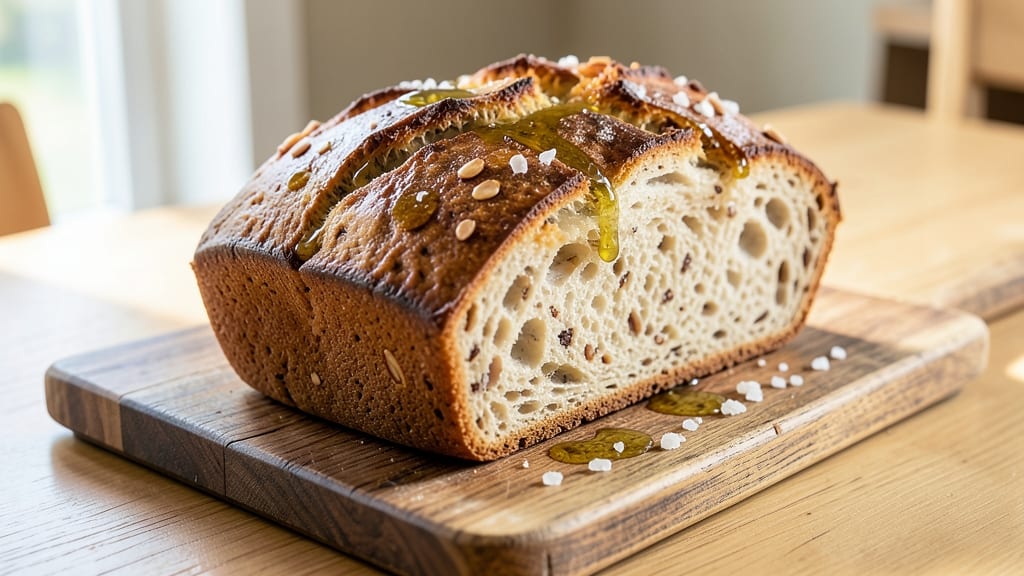
Almond pulp bread transforms leftover almond pulp into a moist, nutty loaf that rivals artisanal sourdough—without the waste. 💛 The secret lies in balancing almond pulp’s natural oils with precise hydration and a touch of xanthan gum for structure, creating a crumb that stays tender for days. This recipe proves that baking with almond pulp isn’t just sustainable; it’s superior to traditional bread.
The key to success is the 3:1 ratio of flour to almond pulp, which prevents dryness while amplifying that rich, toasted almond flavor. A slow fermentation (2–3 hours) develops depth, while baking at 375°F ensures a golden crust without burning.
The result? A loaf with a crisp exterior and a moist, slightly dense interior—perfect for sandwiches or toast.
What sets this bread apart is its versatility: it’s naturally vegan, gluten-free (with proper flour), and packed with protein. The almond pulp adds natural sweetness and a satisfying chew, while a sprinkle of flaky salt on top enhances the nutty notes.
No more tossing out almond pulp—just turn it into something extraordinary.
Whether you’re baking for a crowd or simply reducing food waste, this recipe delivers restaurant-quality results with minimal effort. The dough is forgiving, the aroma irresistible, and the texture impossible to resist. Let’s get started!
Ingredients for almond pulp bread
Transform almond pulp’s natural oils and sweetness into a moist, protein-rich loaf with these carefully balanced ingredients.
| Ingredient | Amount | Notes |
|---|---|---|
| Almond Pulp 🌰 | 1 ½ cups | Freshly strained from almond milk |
| All-Purpose Gluten-Free Flour Blend 🌾 | 4 ½ cups | Bob's Red Mill 1:1 preferred |
| Xanthan Gum 🧪 | ¼ tsp | Essential for structure |
| Active Dry Yeast 🍞 | 1 ½ tsp | Freshly measured, not expired |
| Granulated Sugar 🍚 | ½ cup | Organic preferred for flavor |
| Extra-Virgin Olive Oil 🫒 | ¼ cup | High-quality, fruity variety |
| Warm Water 💧 | 1 ¼ cups | 110°F for optimal yeast activation |
| Flaky Sea Salt 🧂 | 1 ½ tsp | Diamond Crystal preferred |
| Ground Flaxseed 🌾 | 1 tbsp | For binding and nutrition |
| Apple Cider Vinegar 🍎 | 1 tbsp | For fermentation boost |
| Sesame Seeds 🌻 | 1 tbsp | For topping, optional |
The almond pulp is your flavor foundation—strained fresh from almond milk delivers maximum richness. Bob's Red Mill gluten-free flour blend ensures proper texture without dryness, while xanthan gum (never skip this!) mimics gluten’s structure. For yeast, Trader Joe's brand is reliable, but test it first—expired yeast ruins everything. The flour should be stored in an airtight container to prevent moisture absorption, which can degrade the blend's performance. If you're using store-bought almond pulp, strain it through a fine-mesh sieve to remove any grit that could affect texture.
No almond pulp? Substitute with 1.5 cups finely ground almond flour, but expect a slightly denser crumb. Running short on gluten-free flour? White rice flour or sorghum flour can replace up to half the blend, though texture may vary. The flaxseed can be swapped for chia seeds at the same ratio, though flaxseed has a milder flavor. For salt, Diamond Crystal kosher saltwhite vinegar works in a pinch, but the flavor will differ slightly.
Fresh almond pulp lasts 3 days refrigerated in an airtight container, while dried pulp keeps for 6 months in a cool, dark place. The gluten-free flour blend should be stored in the freezer for long-term freshness. Once mixed, the dough can ferment at room temperature for 2-3 hours or overnight in the fridge for deeper flavor. The baked loaf stays fresh for 3 days wrapped in a clean kitchen towel, or freeze slices for up to 3 months. For extra crunch, toast slices in a 375°F oven for 2-3 minutes before serving.
Why You'll Love This Recipe
- No Waste Bread: I swear by this trick—using leftover almond pulp from making almond milk? No more tossing it. Just blend it into the dough, and suddenly you’ve got a fragrant, moist loaf that tastes like you spent hours baking.
- Nutty Crunch Surprise: That almond pulp gives it a subtle, toasty depth you won’t find in regular bread. The yeast and sugar team up to make it just sweet enough, but honestly? The real magic is when you toast a slice—crisp edges, soft center, and that almond aroma filling the kitchen.
- Breakfast to Brunch Hero: Serve it warm with jam for a lazy morning, or tear it into croutons for salads. I’ve even used it as a base for French toast—dipped in egg, a sprinkle of cinnamon, and it’s ridiculously good. (Yes, even on a Tuesday night.)
- Budget-Friendly Stretch: Gluten-free baking can get pricey, but this recipe cuts costs by using pantry staples. The xanthan gum keeps it sturdy, and the yeast makes it rise like a dream—so you get more slices per loaf without breaking the bank. Plus, it keeps for days, so no sad, stale bread here.
Step-by-step instructions for almond pulp bread
Transforming almond pulp into a tender, nutty loaf requires precision timing and gentle handling.
👨🍳 Step 1: Activate the Yeast and Prepare the Almond Base
In a small bowl, combine the 1.5 cups almond pulp, 1.25 cups warm water (110°F), 1 tbsp apple cider vinegar, and 0.5 cup granulated sugar. Stir until the sugar fully dissolves—this helps activate the yeast and creates a smooth base. Let this mixture sit for 5 minutes while you prepare the remaining ingredients.
In a separate small bowl, whisk together 1.5 tsp active dry yeast with 1 tbsp ground flaxseed and 1.5 tsp flaky sea salt. The flaxseed adds binding properties while the salt enhances flavor and controls yeast activity. Sprinkle this mixture over the almond pulp mixture and stir gently. You should see small bubbles forming within 3-5 minutes—this confirms your yeast is active and ready to work.
👨🍳 Step 2: Combine Wet and Dry Ingredients
In the bowl of a stand mixer fitted with the paddle attachment, combine the 4.5 cups all-purpose gluten-free flour blend and 0.25 tsp xanthan gum. Mix on low speed for 30 seconds to aerate the flour—this prevents dense crumb. With the mixer running on low, slowly pour in the almond pulp mixture while scraping down the sides of the bowl to ensure even distribution.
Add the 0.25 cup extra-virgin olive oil and mix on low speed for another 30 seconds until just combined. The dough will be shaggy and sticky at this stage—this is normal. Avoid overmixing, as gluten-free dough develops structure differently than wheat-based dough. The mixture should resemble thick pancake batter with small air pockets forming.
⏰ Step 3: Knead and Rest for Optimal Texture
Switch your mixer to the dough hook attachment and knead on medium speed for 3-4 minutes. The dough will begin to come together and pull away from the sides of the bowl. You're looking for a smooth, slightly tacky dough that passes the "windowpane test"—when stretched gently, it should be thin enough to see light through without tearing.
Transfer the dough to a lightly oiled bowl, cover with a damp kitchen towel, and let it rest at room temperature for 1 hour. This resting period allows the gluten-free flour blend to hydrate fully and the xanthan gum to activate properly. The dough will rise slightly and become more pliable—this is when it develops its signature moist crumb. Don't skip this step; it's crucial for preventing a dense final product.
🔥 Step 4: Shape and Proof the Dough
Lightly flour a clean work surface and gently transfer the dough onto it. Shape the dough into a 9x5-inch loaf pan by pressing it firmly into the corners. The dough will be sticky, so wet your hands slightly as needed to prevent sticking. Cover the pan with a damp towel and let it proof in a warm place (78-80°F) for 1-1.5 hours or until it has risen approximately 1 inch above the pan.
To test if it's ready, gently press your finger into the dough—it should spring back slowly rather than immediately. This indicates proper fermentation. The top should also appear slightly domed with small bubbles visible. If the dough doesn't rise sufficiently, your yeast may not have been active enough—this is why the initial activation test is critical.
🔥 Step 5: Bake to Golden Perfection
Preheat your oven to 350°F and position a rack in the lower third of the oven. Brush the top of the dough with a little extra-virgin olive oil and sprinkle evenly with 1 tbsp sesame seeds for texture and flavor. Bake for 45-50 minutes until the internal temperature reaches 190-195°F and the top is golden brown with an internal crumb that looks moist but fully set.
I like to tap the bottom of the loaf pan—when it sounds hollow, that's your cue it's done. Immediately transfer the bread to a wire rack to cool completely before slicing. The bread will continue to set as it cools, developing that perfect moist crumb with nutty depth from the almond pulp. Slice when completely cool for clean cuts that reveal the tender interior.
Pro Tips For Making Almond Pulp Bread
- Hydrate the Almond Pulp: Soak the almond pulp in warm water for at least 30 minutes before mixing—it absorbs liquid like a sponge and makes the dough less sticky. I learned this the hard way when my first batch turned out dense and gummy because I skipped it.
- Measure Xanthan Gum Precisely: Use a scale for the xanthan gum—1/4 teaspoon is enough, but eyeballing it can throw off the bread’s structure. Too much makes it rubbery; too little means it’ll crumble. Trust me, your kitchen scale is your friend here.
- Proof the Yeast Slowly: Let the yeast activate in warm (not hot) water—around 105°F (40°C)—and wait until it foams before adding it to the dough. Cold water kills it; hot water cooks it. Patience here saves you from a flat loaf.
- Brush with Egg Wash: Skip the water brush—whisk 1 egg with 1 tablespoon water, then paint the loaf before baking. It gives a golden crust and keeps the bread moist longer. (Yes, even if you’re gluten-free, this works.)
Troubleshooting your almond pulp bread
Dough Too Sticky?
Gluten-free dough can be notoriously sticky, but don’t panic! Wet your hands with water or olive oil before handling to prevent sticking.
If the dough feels unmanageable, add 1-2 tbsp more gluten-free flour blend gradually until it becomes pliable—but avoid overdoing it, as too much flour can make the bread dry. I’ve found that using a lightly oiled silicone spatula helps lift and shape the dough without tearing it. 💡
Yeast Not Activating?
If your yeast mixture isn’t bubbling after 5 minutes, your yeast may be dead or the water too hot. Test the water temperature with a thermometer—it should be exactly 110°F. If the yeast is inactive, replace it with 1.5 tsp fresh yeast and try again.
Pro tip: Store your yeast in the fridge to extend its shelf life—it lasts up to 3 months this way. 🌱
Bread Dense or Dry?
A dense or dry loaf usually means overmixing or insufficient hydration. For the next batch, reduce mixing time to 2 minutes total and ensure your almond pulp is fully strained (no grit!).
If the bread still feels dry, try adding 1 tbsp extra olive oil to the dough. For extra moisture, brush the baked loaf with melted coconut oil before serving. 💧
Crust Too Pale?
If your bread isn’t browning enough, try these fixes: Brush the top with water or milk before baking for a glossy finish, then sprinkle with flaky salt. For deeper color, bake at 375°F for 5-10 extra minutes with the oven light on (if your oven has one).
A dark-colored loaf pan also helps absorb more heat. 🔥
Uneven Rise?
Uneven rising often happens if the dough isn’t proofed in a warm enough environment. Place your proofing bowl on top of the oven (with the oven off) or use a proofing box with a light bulb for consistent warmth.
If your kitchen is cold, try proofing near a sunny window or under a heat lamp. Avoid drafty areas—consistent temperature is key! 🌡️
Almond Pulp Too Wet?
If your almond pulp is overly wet, strain it through a cheesecloth-lined sieve for 10-15 minutes to remove excess liquid. For every ½ cup extra liquid, reduce the water in the recipe by ¼ cup.
If the dough still feels too wet, add 1 tbsp more gluten-free flour blend at a time until it holds together. 🌰
Nutrition facts
Frequently asked questions about almond pulp bread
Can I use store-bought almond pulp instead of homemade?
Yes, but strain it first! Store-bought almond pulp often contains extra moisture and grit. Place it in a cheesecloth-lined sieve and let it drain for 10-15 minutes before measuring. This removes excess liquid and ensures a smoother texture in your bread.
What if I don’t have gluten-free flour?
No problem! Use a 1:1 white rice flour blend or sweet rice flour for a neutral flavor. For better texture, add 1 tsp psyllium husk powder per cup of flour to mimic gluten's binding properties. The bread will still be moist but slightly denser.
How long does the dough need to rest before shaping?
The 1-hour rest is crucial for gluten-free dough—it allows the xanthan gum to activate and the flour to fully hydrate. Skip this step, and your bread may turn out dense. For extra flavor, refrigerate the dough overnight after mixing, then proof for 2-3 hours before baking.
Can I make this bread without yeast?
Replace the yeast with 1.5 tsp baking powder and 1 tsp baking soda for a quick-bread version. Mix all wet ingredients first, then fold in dry ingredients gently. Bake at 350°F for 35-40 minutes until the internal temp reaches 190°F. The texture will be denser but still moist.
Why does my bread taste bitter?
Bitter flavor usually comes from overproofed yeast or using old almond pulp. Ensure your yeast activates within 5 minutes and proof the dough for no longer than 1.5 hours. For almond pulp, use fresh pulp or toast it lightly in a dry pan before adding to reduce bitterness.